Size Is the Primary Distinction
The most fundamental difference between peptides and proteins is chain length. Peptides are generally defined as amino acid chains containing 2 to 50 residues, while proteins contain 50 or more. Some definitions place the boundary at 100 amino acids. In practice, the distinction is less about an arbitrary cutoff and more about the biological consequences of size.
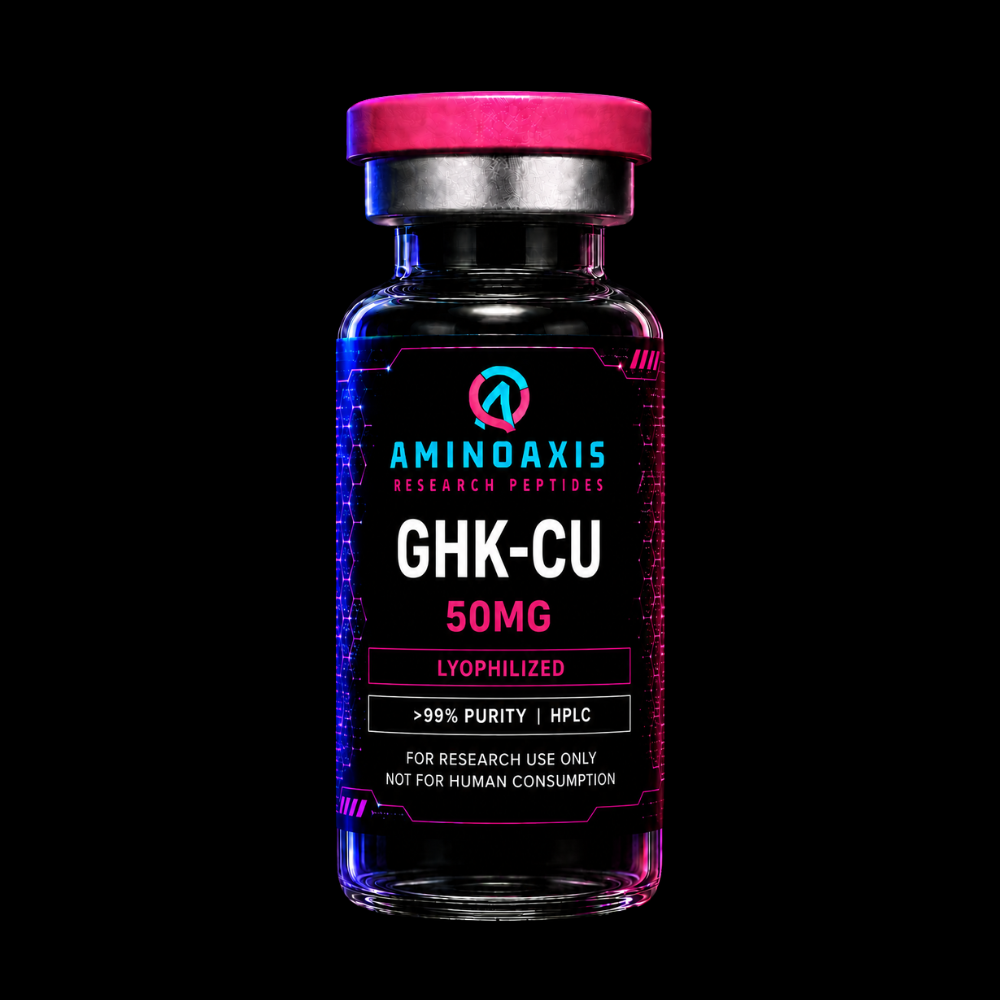
For context: GHK-Cu is a tripeptide (3 amino acids). BPC-157 is a pentadecapeptide (15 amino acids). Insulin, often called a peptide hormone, contains 51 amino acids and sits at the boundary. Hemoglobin, a protein, contains 574 amino acids.
Structural Complexity
Proteins fold into complex three-dimensional structures — alpha helices, beta sheets, loops, and domains — that are essential for their function. A misfolded protein is typically non-functional. This folding is driven by hydrophobic interactions, hydrogen bonds, and disulfide bridges between distant parts of the chain.
Most peptides, being shorter, do not form stable three-dimensional structures in solution. They tend to exist as flexible chains that adopt transient conformations. This structural simplicity is actually an advantage for research — peptides are easier to characterize analytically and less susceptible to denaturation than proteins.
Synthesis Methods
Peptides can be efficiently produced by chemical synthesis (SPPS). A skilled synthesis lab can produce milligrams to grams of a pure peptide in days. The process is well-established, highly reproducible, and allows incorporation of non-natural amino acids and chemical modifications.
Proteins are too large for efficient chemical synthesis. They are typically produced using recombinant DNA technology — engineering bacteria, yeast, or mammalian cells to express the desired protein. This biological production is slower, more complex, and subject to batch-to-batch variability from the expression system.
Stability and Handling
Lyophilized peptides are generally more stable than proteins during storage and shipping. Proteins are sensitive to temperature, pH changes, and mechanical stress (like shaking), which can cause irreversible denaturation and aggregation. Peptides are more tolerant of these conditions, though proper storage at -20°C or 2-8°C is still recommended.
Research Applications
Peptides are widely used as receptor ligands, enzyme substrates, signaling molecule analogs, and tools for studying specific biological pathways. Their defined composition and high synthetic purity make them ideal for quantitative research where knowing exactly what is in your vial matters.