Nitric Oxide in Biology
Nitric oxide (NO) is a gaseous signaling molecule produced by nitric oxide synthase (NOS) enzymes from the amino acid L-arginine. Despite its simple structure, NO regulates a remarkably diverse set of biological processes including vasodilation, neurotransmission, immune defense, and wound healing. Its discovery as a biological signaling molecule earned the 1998 Nobel Prize in Physiology or Medicine.
Three NOS Enzymes
eNOS (endothelial NOS): Produces NO in blood vessel endothelial cells, causing vasodilation and regulating blood flow. Critical for cardiovascular homeostasis.
nNOS (neuronal NOS): Produces NO in neurons, where it functions as a neurotransmitter and neuromodulator. Involved in synaptic plasticity and neuroprotection pathways.
iNOS (inducible NOS): Activated during immune responses, producing large amounts of NO that kill pathogens. Also involved in inflammatory signaling — both protective and potentially damaging depending on context.
BPC-157 and the NO System
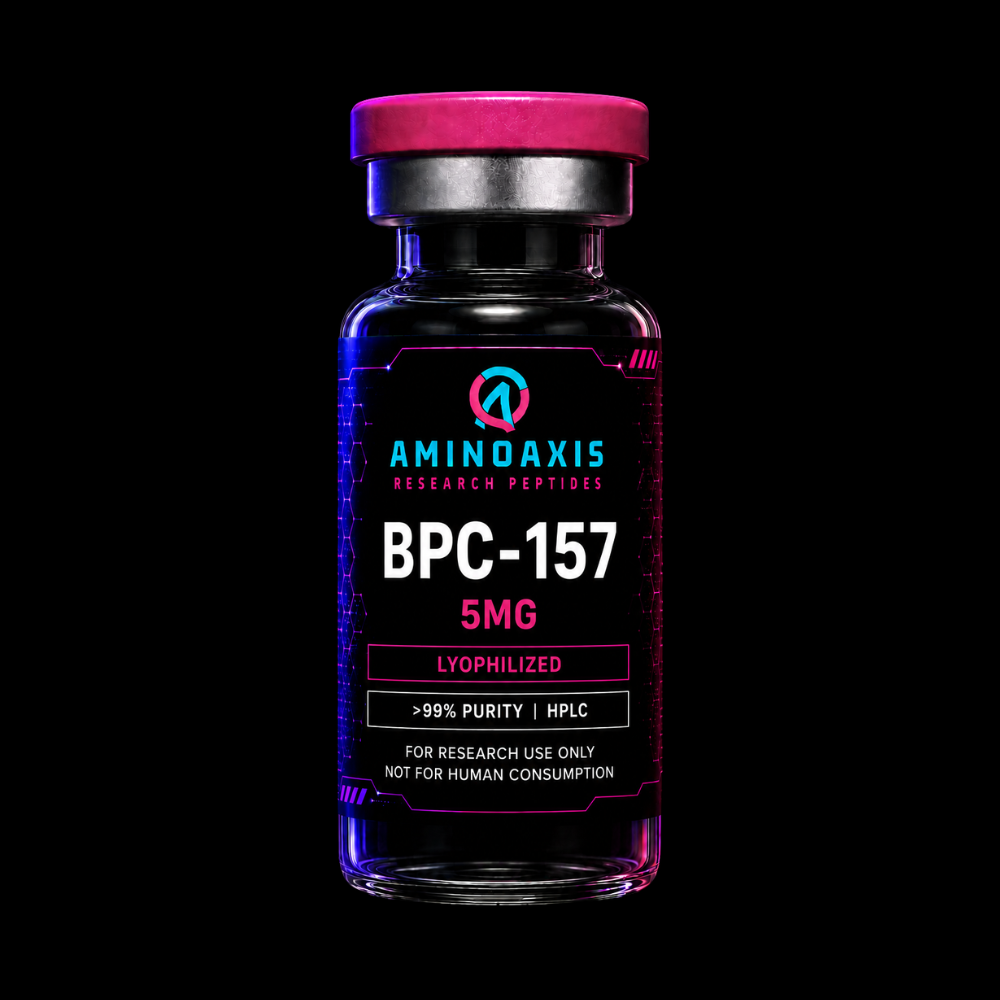
Multiple published studies have investigated the interaction between BPC-157 and the nitric oxide system. The research shows a complex, context-dependent relationship. In some experimental models, BPC-157's effects are blocked by NOS inhibitors (like L-NAME), suggesting NO mediates its activity. In other models, BPC-157 appears to counteract the effects of both NOS inhibition and excessive NO production.
This bidirectional relationship has led researchers to describe BPC-157 as a modulator rather than a simple activator or inhibitor of the NO system. Published data suggests it may help restore NO signaling toward physiological levels regardless of the direction of disruption — a property that, if confirmed, would be mechanistically unusual.
NO and Wound Healing
NO plays established roles in wound healing at multiple stages. Early after injury, NO produced by iNOS in macrophages contributes to pathogen defense. Subsequently, eNOS-derived NO promotes angiogenesis and blood flow to the wound site. NO also stimulates collagen synthesis and wound contraction through effects on fibroblasts.
The involvement of NO in wound healing provides a mechanistic link between BPC-157's reported NO system interactions and its published effects on tissue repair in animal models.
Research Implications
For researchers studying BPC-157 or other peptides that may interact with NO signaling, understanding the NO pathway helps in designing experiments and interpreting results. Key considerations include the choice of cell type (different NOS isoforms dominate in different tissues), the inclusion of NOS inhibitor controls, and the measurement of NO production or downstream signaling markers like cGMP.