Copper in Skin Biology
Copper is an essential trace element required for the function of several enzymes critical to skin health. Lysyl oxidase, which crosslinks collagen and elastin fibers, requires copper as a cofactor. Superoxide dismutase (Cu/Zn-SOD) depends on copper for antioxidant defense. Tyrosinase, involved in melanin production, is also copper-dependent.
The challenge in skin biology research has been delivering copper to target cells in a bioavailable form. Free copper ions can generate reactive oxygen species through Fenton-like chemistry, causing oxidative damage. Copper peptides solve this problem by binding copper in a stable complex that delivers the metal to cells without free-radical generation.
GHK-Cu: The Most Studied Copper Peptide
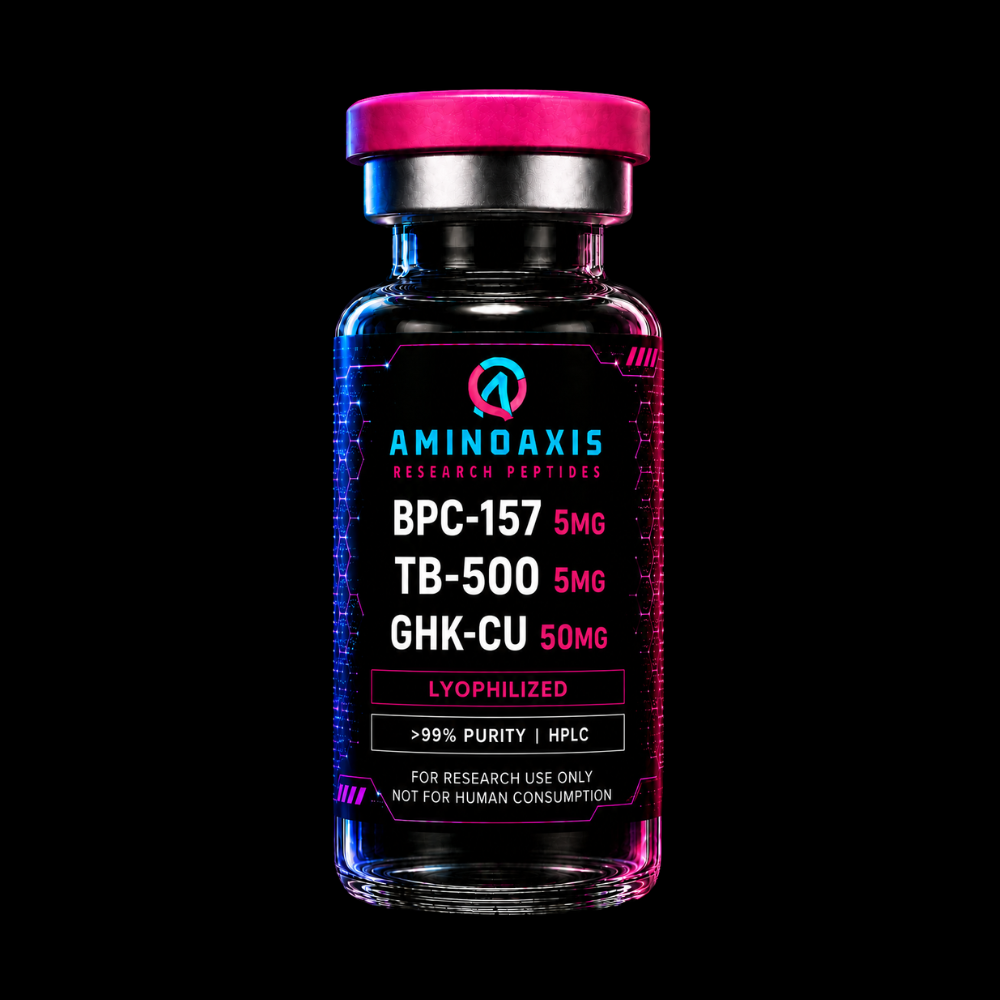
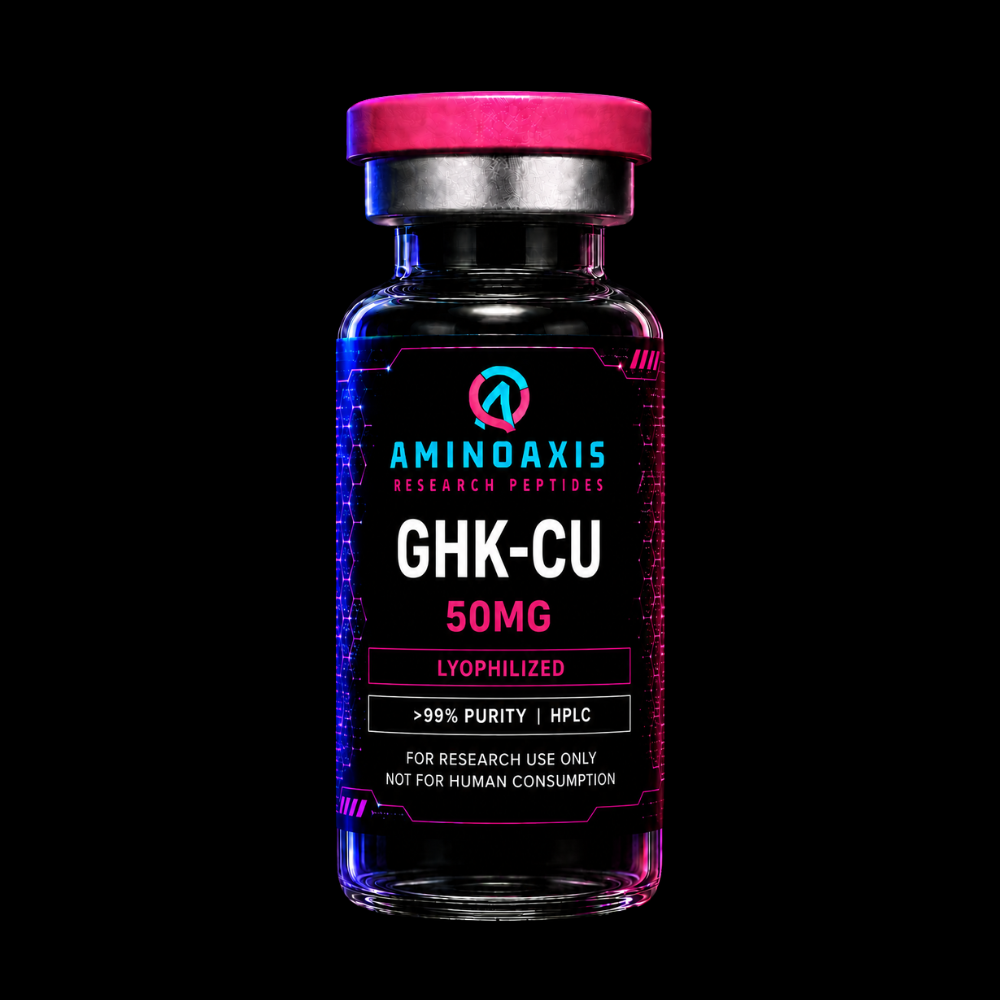
Glycyl-L-histidyl-L-lysine copper complex (GHK-Cu) is the most extensively researched copper peptide, with over 100 published studies. Its research profile spans collagen synthesis stimulation, wound healing acceleration, anti-inflammatory activity, and broad gene expression modulation affecting over 4,000 human genes.
The histidine residue in GHK provides the primary copper-binding site through its imidazole nitrogen. This binding creates a stable complex at physiological pH while remaining labile enough to release copper to cellular uptake mechanisms.
Other Copper-Binding Peptides
AHK-Cu (Ala-His-Lys-Cu): A GHK-Cu analog with alanine replacing glycine at the N-terminus. Published research suggests similar collagen-stimulating properties with potentially different cellular uptake kinetics.
Biotinoyl-GHK: A biotinylated derivative of GHK designed for enhanced cellular penetration. Research has focused on its effects on extracellular matrix components in dermal fibroblast cultures.
Palmitoyl pentapeptides: Lipophilic peptide-copper complexes designed for improved skin penetration in topical research applications.
Research Mechanisms
Copper peptides influence skin biology through several documented pathways. They stimulate collagen I and III synthesis in fibroblast cultures. They increase glycosaminoglycan production including hyaluronic acid and dermatan sulfate. They modulate matrix metalloproteinase (MMP) activity, affecting the balance between ECM synthesis and degradation. And they activate wound healing cascades including angiogenesis and nerve growth factor expression.
Laboratory Considerations
GHK-Cu is supplied as a lyophilized copper complex and reconstituted in bacteriostatic water for research use. The copper content should be verified as part of quality assessment. Storage at 2-8°C after reconstitution maintains stability. Avoid contact with strong chelating agents (EDTA, DTPA) which can strip the copper from the peptide complex.